Case Study: Architecting Real-Time Visibility for High-Volume Retail
Executive Summary
GlobalMart Inc., a multinational e-commerce giant, was flying blind. Despite processing millions of transactions daily across 12 regions, their reporting infrastructure was stuck in the past. Executives received critical sales data with a 24-hour lag, making it impossible to react to flash trends, inventory runouts, or fraudulent activity in real-time.
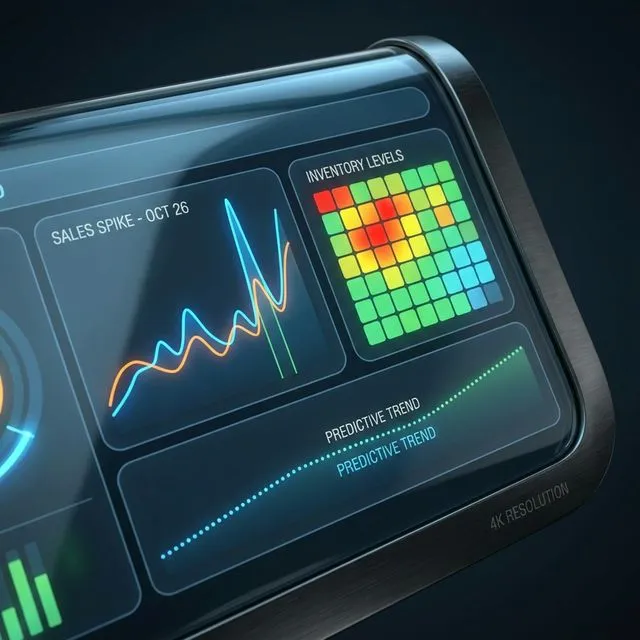
We were tasked with building a Real-Time Analytics Dashboard capable of ingesting, processing, and visualizing over 50,000 events per second with sub-second latency. The goal was to give category managers, logistics coordinators, and C-level executives a "God Mode" view of their global operations.
The resulting platform transformed GlobalMart's decision-making process. By shifting from batch processing to event streaming, we enabled dynamic pricing adjustments that drove a 12% revenue uplift during Black Friday and reduced improved inventory turnover by 22%.
The Challenge
The Latency Tax
GlobalMart's legacy data warehouse ran nightly ETL (Extract, Transform, Load) jobs. This meant that by the time a report was generated on Tuesday morning, the data was already stale.
- Missed Opportunities: If a product went viral on TikTok at 2 PM, the marketing team wouldn't know until the next day, missing the peak window for ad spend.
- Inventory Inefficiencies: Stockouts in one region were not visible to neighboring fulfillment centers in real-time, leading to lost sales despite available inventory nearby.
- Fraud Detection: Fraudulent transaction patterns (e.g., card testing attacks) could run rampant for hours before being flagged.
Scale & Complexity
The system needed to handle:
- High Throughput: peaks of 50,000+ events per second (orders, clicks, cart adds, inventory updates).
- Data Variety: Structured transactional data, semi-structured clickstream logs, and unstructured customer feedback.
- Visualization Performance: Rendering millions of data points on a frontend without freezing the browser.
The Solution
We designed a Real-Time Event-Driven Architecture that treats data as a continuous stream rather than static records.
Architectural Pillars
1. Integration Layer: The Nervous System
We utilized Apache Kafka as the central nervous system. All microservices (Order Service, Inventory Service, User Activity Service) publish events to Kafka topics.
- Decoupling: This decoupled producers from consumers. The Order Service didn't need to know who was consuming the
order_createdevent; it just fired and forgot. - Durability: Kafka's log-retention policies ensured that even if downstream consumers failed, no data was lost. We could simply "replay" the stream.
2. Processing Layer: Stream Analytics
Raw events are often too granular. We used Apache Flink for stateful stream processing:
// Real-time sales aggregation with tumbling windows
DataStream<OrderEvent> orders = env
    .addSource(new FlinkKafkaConsumer<>(
        "orders", new OrderEventSchema(), kafkaProps));

DataStream<SalesSummary> salesByRegion = orders
    .filter(e -> e.getStatus() == OrderStatus.COMPLETED)
    .keyBy(OrderEvent::getRegion)
    .window(TumblingProcessingTimeWindows.of(Time.minutes(5)))
    .aggregate(new SalesAggregator())
    .name("5min-sales-by-region");

// Enrich with product dimension table
DataStream<EnrichedOrder> enriched = orders
    .connect(productDimTable.getBroadcastStream())
    .process(new ProductEnricher())
    .name("order-enrichment");
- Windowing: Flink aggregates data in real-time windows (e.g., "Total sales in the last 5 minutes by region").
- Enrichment: An incoming order event contains a
product_id, but the dashboard needs theproduct_nameandcategory. Flink joins the stream with static dimension tables to enrich the data on the fly. - Late Event Handling: Orders arriving out of sequence (e.g., due to network delays) are handled via Flink's watermark strategy with a 30-second allowed lateness.
3. Storage Layer: Speed vs. History
We adopted a polyglot persistence strategy:
- Redis: For "Right Now" data. Active user counts, cart abandonments in the last hour, and real-time leaderboards are stored in Redis for millisecond access.
- ClickHouse: For OLAP (Online Analytical Processing). This columnar database allows users to slice and dice billions of rows of historical data with query times under 1 second. It powers the "Year-over-Year" comparison charts.
Frontend Innovation
Building a UI that updates thousands of times per second is non-trivial. Standard DOM manipulation techniques would grind the browser to a halt.
WebGL & Canvas Acceleration
For the geospatial map visualization (showing live orders popping up across the globe), we used Three.js and deck.gl.
- GPU Offloading: By rendering points as vertices on the GPU, we could visualize 100,000+ live entities simultaneously at 60 FPS.
- Binary Transport: We switched from JSON to Protocol Buffers over WebSockets. This reduced payload size by 60% and eliminated the parsing overhead of JSON on the main thread.
Intelligent Throttling
Humans cannot perceive 50 updates per second. We implemented an adaptive throttling mechanism on the client.
- Visual Persistence: The underlying data model updates instantly, but the UI repaints at a maximum of 30Hz.
- Data Delta: Instead of resending the entire dataset, the backend sends only the deltas (changes) since the last frame.
Technical Deep Dive: The "Black Friday" Test
The true test came during Black Friday. We anticipated a 10x load spike.
Auto-Scaling Strategy
We utilized Kubernetes (K8s) Semantic Scaling. Instead of scaling pods based on CPU usage (which is a lagging indicator), we scaled based on Kafka Consumer Lag.
- If the lag increased (meaning the consumer couldn't keep up with the producer), K8s automatically spun up more Flink task managers to handle the backpressure.
Fault Tolerance
During the peak, one of the availability zones experienced a partial outage.
- Circuit Breakers: Our services immediately tripped circuit breakers to failing nodes.
- Graceful Degradation: The dashboard automatically switched to "Low Fidelity Mode," disabling the real-time map but keeping the critical sales numbers live. The business didn't skip a beat.
Impact & Results
The deployment of the Real-Time Analytics Dashboard fundamentally changed GlobalMart's operational DNA.
Quantitative Wins
- 12% Revenue Uplift: Dynamic pricing algorithms, fed by real-time demand data, captured additional margin during high-demand windows.
- 22% Improved Inventory Turns: Logistics teams could re-route inventory from overstocked regions to understocked ones in hours, not days.
- 99.99% Uptime: The resilient architecture weathered the massive traffic spikes of Cyber Week without a single minute of downtime.
Cultural Shift
Beyond the numbers, the dashboard created a culture of transparency. Screens were installed in the hallways of HQ. Developers, marketers, and support agents all watched the same "pulse" of the company. It aligned 5,000 employees around a shared reality.
Future Roadmap
- Predictive Anomaly Detection: Moving from "What is happening?" to "What is unusual?". We are training LSTM models to detect anomalies (e.g., a sudden drop in checkout conversion rate) and alert teams automatically.
- Natural Language Querying: Integrating LLMs to allow executives to ask questions like "Show me sales in Brazil compared to last week" and having the dashboard auto-configure itself.
- Edge Computing: Pushing some aggregation logic to the CDN edge to further reduce latency for global users.
Conclusion
In the modern digital economy, speed is the ultimate currency. GlobalMart's Real-Time Analytics Dashboard proves that when you remove the latency between data generation and decision-making, you unlock massive value. We didn't just build a dashboard; we built a time machine that let GlobalMart see the future of their business as it was happening.
Technologies Used: React, Next.js, Apache Kafka, Apache Flink, Redis, ClickHouse, WebSocket, Three.js, Kubernetes, Golang.